
Mechanical Engineering Translation for Machines, Plant and Components
Engiwords translates mechanical engineering documentation for UK machine builders, equipment manufacturers, plant operators and engineering consultancies: drawings, specifications, calculations, manuals and parts lists, with every dimension, tolerance and torque value checked against the source.
Quote within 30 minutesDocuments That Follow a Machine From Design to Scrap
Each machine leaves a paper trail: design calculations, general arrangement and detail drawings, specifications, factory acceptance tests, operating and maintenance manuals, spare parts lists and service bulletins. When the machine is sold abroad, built by an overseas supplier or maintained by a multilingual team, that trail has to exist in more than one language.
Mechanical writing is unforgiving. A bush is not a bearing, a gland is not a seal, and a tolerance written H7 must stay H7. UK drawings follow BS 8888 and the ISO standards it references, threads and fits follow ISO designations, and every term must match the component on the drawing.
Our mechanical translators include former design engineers, maintenance engineers and technical authors. They read the drawing before they translate the note, and a second linguist from the same discipline revises every file.
Branches of Mechanical Engineering We Translate
We cover documentation from the main families of mechanical equipment, from single components to complete production lines.
Industrial Machinery
Special-purpose machines, packaging and production lines, machine tools and process equipment, with manuals and risk assessments.
Rotating Equipment
Pumps, compressors, fans, turbines and gearboxes: data sheets, performance curves, installation and overhaul manuals.
Pressure Equipment
Pressure vessels, heat exchangers, boilers and pipework, with design calculations, PED or PER documentation and inspection records.
HVAC and Building Services
Air handling, chillers and refrigeration plant, from submittals and drawings to commissioning records and O&M manuals.
Material Handling
Conveyors, cranes, hoists and storage systems, with load charts, thorough examination reports and safety instructions.
Hydraulics and Pneumatics
Power units, cylinders, valves and pneumatic circuits, with schematics, setting values and maintenance instructions.
Mechanical Documents We Handle
These are the mechanical documents clients send us most often, each linked to a page that explains our method.
Drawings and GD&T
GA, assembly and detail drawings, with notes and title blocks translated in the CAD or PDF file and GD&T frames left untouched.
Specifications and Data Sheets
Equipment and purchase specifications and data sheets, with ratings, materials and requirements reproduced exactly.
Operating Manuals
Operating instructions written for the people who run the machine every shift, in short, clear steps.
Maintenance Manuals
Planned maintenance, overhaul and repair procedures with torques, clearances and intervals checked against the source.
Installation Instructions
Installation, alignment and commissioning instructions for site fitters, with every setting value kept.
Parts Lists and BOMs
Spare parts lists and bills of materials with part numbers locked and descriptions sized for your ERP fields.
Calculations and Test Reports
Design calculations, FEA reports, factory acceptance tests and performance test reports.
UKCA and CE Files
Technical files, risk assessments, instructions and declarations of conformity for UKCA and CE marking.
Exact Words for Exact Parts
Standards define both the rules and the vocabulary of mechanical documents. Our translators work with BS 8888 and ISO GPS standards for drawings, ISO 286 for fits, ISO thread designations, EN material grades and the harmonised standards for machinery safety, such as EN ISO 12100.
Dimensions, tolerances, surface finish symbols, thread designations, material grades and torque values are locked in our tools and checked again after translation. GD&T frames and symbols are never altered.
- Dimensions, tolerances and fits unchanged
- Threads, grades and finishes reproduced exactly
- One name per component across all documents
- References to BS EN, ISO, ASME and API standards preserved
Translators Who Start With the Drawing
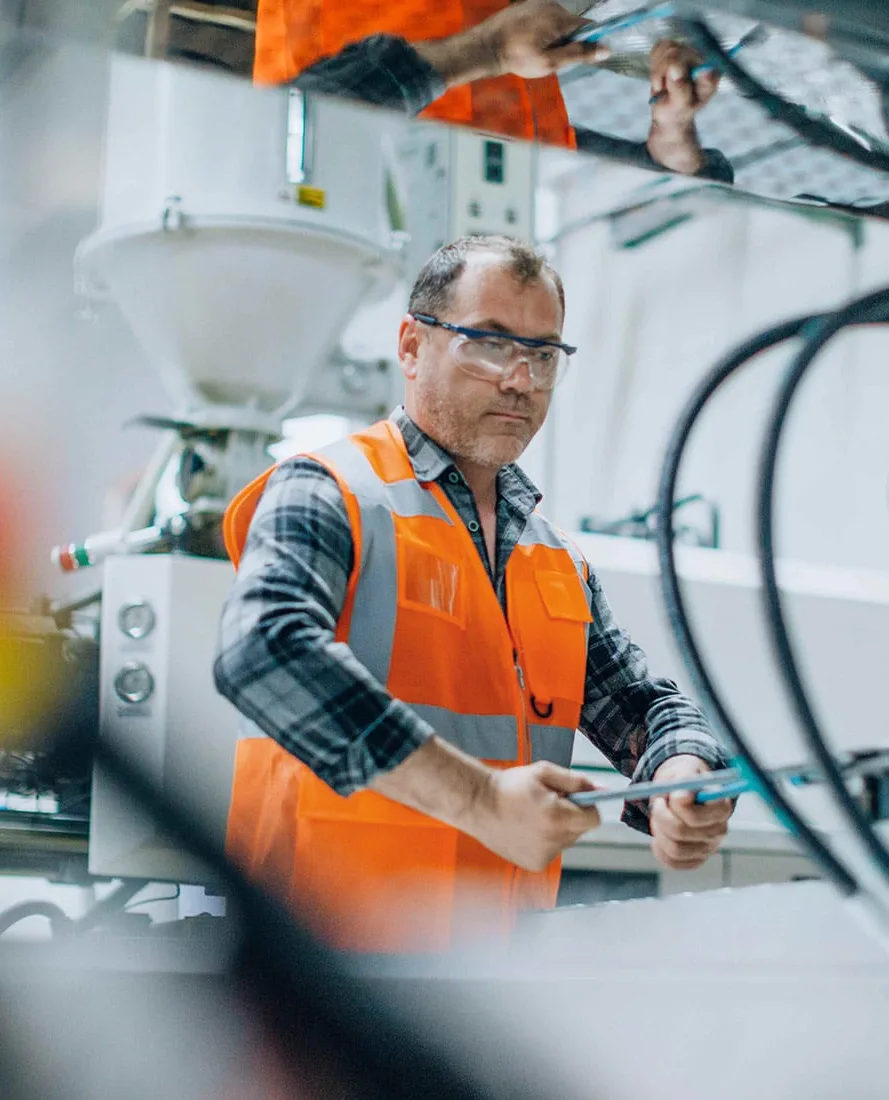
Before translating an assembly instruction, our translators study the drawing and parts list, so each step refers to the right component and each adjustment to the right setting. Questions about the design go to your engineers rather than being guessed.
On recurring work, the same team stays with your products and learns your assemblies, naming conventions and preferences. Each new manual starts from what has already been approved.
Translation Through the Life of a Machine
Each phase brings different documents and different readers.
Design
Specifications, calculations and drawings shared with customers, partners and overseas design offices.
Sourcing
Purchase specifications for overseas suppliers, and their drawings, certificates and manuals translated back into English.
Build and Test
Assembly instructions, inspection plans, welding procedures and FAT protocols for workshops and witnesses.
Delivery and Service
Manuals, spare parts lists and service bulletins supplied with the machine and updated through its life.
Mechanical Translation for Export and Import
A machine may be designed in one country, built in another and run in a third. These are the languages our mechanical clients request most.
European Union
Instructions in the language of every EU country where the machine is sold, as the EU Machinery Regulation requires.
North America
English and Spanish manuals for the United States, French for Quebec and Spanish for Mexico, with service documentation for dealers and field teams.
Middle East
Arabic documentation for equipment installed in the Gulf, often supplied alongside English versions.
German and Italian Machinery
Manuals, drawings and certificates for German and Italian equipment translated into British English for UK maintenance teams.
Asian Manufacturers
Documentation from Chinese, Japanese and Korean manufacturers translated into English, with part numbers and values unchanged.
Poland and Central Europe
Polish and Czech manuals and safety documents for machines supplied to plants in Central Europe.
Mechanical Documentation for UK Manufacturers and Buyers
UK machine builders export to Europe, North America, the Middle East and Asia, and each market expects instructions in its own language. For the EU, the Machinery Regulation, applicable from January 2027, requires instructions users can easily understand; for Great Britain, the Supply of Machinery (Safety) Regulations 2008 require English.
UK factories also buy machines from abroad. Manuals, drawings and certificates for German, Italian or Asian equipment must be available in English before installation, PUWER assessments and maintenance planning.
Our method is the same in both directions. Values stay as issued, conversions are applied only on request and recorded, and the terminology of each machine stays consistent across manual, drawings and parts list.
Our Mechanical Workflow
Mechanical documents cross-reference each other all the time. Our workflow keeps them consistent.
Reference Collection
We collect your drawings, parts lists and earlier translations and extract component names into a termbase.
Glossary Validation
Your engineers approve key terms: assembly names, adjustment points and fault descriptions.
Translation and Check
Mechanical specialists translate and revise each file, checking values, tolerances and references.
Consistent Delivery
Files return in their original format, with the same terms in drawings, manuals and parts lists.
The Errors We Catch
Errors in mechanical translations usually change how a part is made, fitted or adjusted. These checks target them.
Component Names
A bearing, bush or seal named one way in the manual and another in the parts list. Your termbase prevents it.
Adjustment Values
Torques, clearances, pressures and temperatures compared with the source after translation.
Drawing Notes
Drawing notes that must fit their box and match the specification they cite.
FAQs About Mechanical Engineering Translation
Are your translators mechanical engineers?
Mechanical projects go to translators with an engineering degree or long experience in mechanical documentation, and a second specialist revises every file.
Can you translate drawings with GD&T?
Yes. Notes, title blocks and callouts are translated in CAD or PDF files, while GD&T frames, symbols and dimensions are left exactly as drawn.
Do you translate UKCA and CE documentation for machinery?
Yes. Instructions, safety information, declarations and the relevant parts of the technical file are translated for UK and EU markets.
Can you translate German or Italian machine manuals into English?
Yes. Translating supplier documentation into British English for UK maintenance and engineering teams is a large part of our work.
Do you convert metric to imperial?
Only on request. Values stay as issued by default, and converted values are added following rules you approve.
How do you keep component names consistent?
We build a termbase from your drawings, parts lists and existing manuals, and use it on every document for your products.
Can you translate calculations and test reports?
Yes. Formulas, values, units and code references in calculations and FEA reports are kept exactly as in the source.
Can you translate the full documentation for a machine?
Yes. Manual, drawings, parts lists, electrical diagrams, labels and declaration can be delivered together, with consistent terminology.
How is mechanical translation priced?
Per word, with lower rates for repeated content found by translation memory. Drawings are quoted per sheet or file.
Can you translate documents for a machine we are buying?
Yes. Supplier specifications, manuals, drawings and certificates can be translated before or after purchase, so your team can assess and maintain the equipment.
Do you translate machine safety labels?
Yes. Warning labels, safety signs and control panel markings are translated with the standard signal words and checked for space.
Mechanical Document Types
Each page explains how we translate one of the main documents in mechanical engineering.
Related Industries
Mechanical engineering is at the heart of many industries we serve.
Get a Quote for Your Mechanical Documents
Upload your drawings, manuals or specifications with the target languages. You will receive a price and schedule within 30 minutes.
Request a Quote